Sunday, April 3, 2016

Have We Finally Hit Peak Excessive Camera Effects in Games?


Over the last few years we've been seeing an increase in the use of various camera effects in games, particularly in cinematics, designed to mimic effects that we see on real cameras. I want to argue in this post that this is a bad trend that we need to move away from, but that it's also a necessary evil we need to work through in order to get to the other side, where games develop their own visual language independent from film and real world cameras.

But first, in order to better make my point, let's talk briefly about UIs (User Interfaces).

The Transition to Flat UIs


For quite a few years, UIs on computers gradually evolved fancier looking 3D designs. One of the main reasons for this was that flat, 2D UIs looked simple and cheap to most people's eyes. It was hard to tell the difference between an intentionally simple UI and a cheaply made one.

But it started getting to the point that people were feeling the the 3D was becoming excessive and wondering how far it could go.

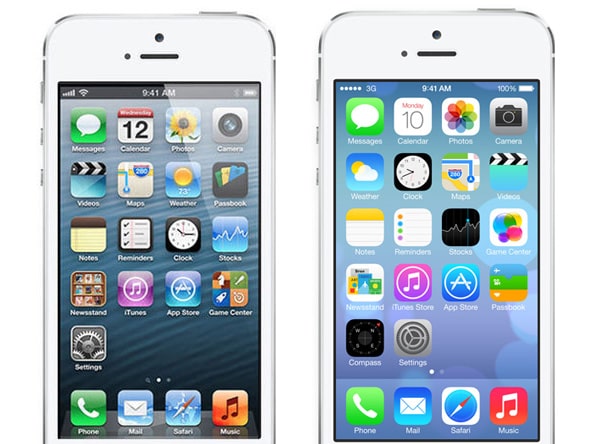
A big change then happened when Microsoft started promoting its Metro UI (there's a longer history there that's not worth going into) and Apple introduced iOS 7. Finally it was acceptable to have flat, minimalist UIs. This has been largely helped by more sophisticated UI toolkits that allow for heavy use of animation and transforms of different kinds to keep the UI interesting without having to resort to gaudy 3D elements.

Camera Effects


I would argue that this is the same process that games have been going through, and I think we might finally be getting to the point that UIs got to when the switch to flat occurred.

Games have always tried to introduce fancy visual effects as a differentiator between budget and AAA titles, and camera effects are a big part of that. Particularly as games have become more mainstream and have had higher production quality trailers made for them, the language of film has also been brought across as a way to make them look slicker and more expensive.

Some of this language is arguably good and improves games:
  • Camera cuts
  • Angles and positioning
  • Simulating focus and depth of field can tell the player what they should be looking at and communicate things like disorientation
  • Camera movements like shaky cam can add to immersion
But some of the stuff that we've brought across are just artifacts from real world cameras that often don't even make any sense in a game like a first person shooter where people are supposed to be looking through human eyes:
  • Lens flares
  • Dirt and grit on the lens
  • Chromatic aberration

And there's also the problem of limiting the language of games by using the language of movies. Games are their own medium and need to develop their own camera language. When games mimic film in cutscenes by doing the "handheld camera" effect to appear more gritty, or limit themselves to the pan, zoom and rotation limits of real physical cameras, they miss an opportunity. Games can certainly be interactive movies if they want, but they can also be so much more than that.

The "Flat UI" Of Camera Effects


I think the industry might finally be ready to accept simple visuals as deliberate design choices rather than a sign of cheapness. Now that free games engines like Unreal Engine, CryEngine and Unity make good looking graphics accessible to indie developers and not just AAA developers, graphics are become less of a product differentiator, and certainly a less reliable way to tell a cheap game from an expensive game.

Games like The Witness have shown how you can have simple but gorgeous graphic design without using gaudy camera effects. The introduction of Virtual Reality devices to the mainstream will also force developers to not be able to rely on camera effects, as these can be quite jarring and sickening in VR. Things like shaky cam are no longer a crutch that can be relied on!

Personally, I've always been a sucker for graphics, and so I've enjoyed the excessive camera effects just as much as I've enjoyed seeing clean, simple visuals. But I do think games need to develop their own voice and identity separate to film and television, and ditching the camera effects will be a step in that direction.


    Why Do We Respect Queues?


    We come across queues in all kinds of places in society. When we recognize that there are several people who all are waiting for something, we will generally agree that it's fair to get it in the order of arrival. Whether it's waiting for the bus, going into a theater, lining up for the next iPhone or getting ice cream on a hot day, most people tend to respect the queue.

    Some people certainly will queue jump or just barge straight in to the front of a line, but generally as long as it isn't a case of scarcity and people being afraid to miss out, most people will play along. If there is scarcity, like American Black Friday sales for example, then you tend to see the normal good behavior break down and it's everyone for themselves. There are limits to politeness for most people!

    But why do we do this at all? Pushing in on a queue isn't breaking any law. For the most part, people won't stop you either. There's a typical range of responses you'll get:
    • Nothing at all
    • Glares and angry faces
    • Muttered objections
    • Direct objections
    • Direct objections with an order to get to the end of the queue
    • Physically being pushed from the queue
    • A physical fight
    Now obviously, depending on where the queue is and who is on it, the probabilities of those different responses can vary wildly. Pushing in on a queue of drunk football fans lining up for beers is typically going to get a different response than a queue of old ladies lining up for bingo. But even in the much safer cases where any kind of real retaliation is unlikely, people will still usually do the right thing.

    Social Pressure


    What it all tends to come down to is social pressures and shaming. Society has long relied on people taking cues from those around them as to what is normal and acceptable, and various kinds of pressures to keep people in check. Most of us have a desire to be seen as a decent person, not an asshole, so usually mild pressures are enough. Getting told off once for jumping a queue is often enough for most people to not do it again.

    Imagine if we had to turn every act of queue jumping into a matter that involved the police. Imagine if we needed the police to step in every time someone littered. A huge amount of what allows society to work with some degree of smoothness is the part that we all play in observing cultural norms and applying mild pressure to each other to keep to them.

    This is one reason why a lot of the feel-good motivational slogans that say things like "You shouldn't care what other people think", "Do what you want to do, not what other people want you to", and "Give zero fucks" are actually really terrible advice that makes society much worse. If everyone did that for real, we'd quite literally have a society of sociopaths, people who don't care how their actions impact on others.

    Crossing The Street In Vietnam


    If you've ever seen a video like the one above, showing how you cross the street in Vietnamese cities like Ho Chi Minh City, you know that the key is to move slowly and predictably. If all the vehicles can predict where you're going to be when they get to you, they will avoid you and you'll be fine. But this only works if everyone plays along. If people had a tendency to be unpredictable, the whole thing would fall apart. It's like the system is a chaotic but well oiled machine, and unpredictable movements by pedestrians are friction that slows the whole machine down.

    The same tends to be true of society in general. While we don't like to push people to conform completely, and everyone loves to be an individual, we rely on people fitting in to social norms an expectations for the most part, because it makes social interactions more predictable, and in the end that tends to reduce friction. People don't have to worry all the time about how they should behave in different situations, or whether they came across as an asshole to someone else because they each had different social expectations.

    Shaming and Retaliation


    The problem with all of this, though, is that the same mechanisms that help society can also be misused to make people conform unfairly. The pressures of social norms can be used to ostracize people who dress differently, have different religious or political views to the majority, or have different interests. As a simple example, the UK is heavily a pub culture, based around the idea that everyone likes to drink alcohol and is interested in watching/discussing sports.

    Further is the problem that these localized social pressures can now, thanks to social media, become global scale shamings. Our society hasn't caught up with this yet, and so the mechanisms that work fairly well on a small scale when only a few people are involved can cause massive problems and destroy lives when those social communications are shared online with the entire world.

    Finally, society also hasn't found good ways to deal with the fact that technology makes the usual retaliation methods not work. When a person pushes in on a queue in real life, there are more subtle options available like a glare or a simple verbal challenge. In social media, it's mostly text, and so people tend to overcompensate and become incredibly rude incredibly fast, because they don't have any subtle ways to provide pressure.

    And if you've ever wondered why road rage exists, it's for the same reason. When someone pushes in front of you in their car or does something else socially rude, they are protected inside a big metal box from normal social retaliation. You can't glare or tell them off like you could if they bumped into you walking along the street. People feel that their usual mechanisms for providing social pressure aren't there, and they also feel that it's unfair that the person gets away with it, not even knowing that they pissed people off, and so people tend to perform more extreme retaliations. It's not that people are assholes, it's that in cars the subtle retaliations are taken away from them.

    Conclusion


    If we want society to keep running smoothly as technology changes it, and as social norms themselves change and evolve, we need to remember that pressures to conform to social norms are the lubrication that keeps social interactions running smoothly. They can be used for good or bad, but society can't function without them, at least not in any way that we've figured out yet. We need to stay vigilant to their abuse, but we also need to accept that unless we want to live in some kind of Orwellian surveillance state with no freedom, abuses will happen sometimes, and as long as they're not too serious or damaging that might be the necessary price of a working society.


    Sunday, February 21, 2016

    Are People Still Not Realizing How Different The US 2016 Election Is?


    At the time that I am writing this, Donald Trump is looking to be the clear leader as the Republican candidate for the general election, while on the Democratic side, Hillary Clinton and Bernie Sanders are still competing strongly for the lead. The general opinion seems to be that a lot of Democrats want Bernie Sanders, but feel that Hillary Clinton is the only one of the two who has a real chance of winning a general election.

    This situation will probably largely sort itself out in a little over a week with the Super Tuesday elections, when we'll see if the Bernie Sanders idealists win out, or the Hillary Clinton "she knows how to play the game" / "it's time for a female president" crowd do.

    I've been a Sanders supporter from the start, and I've found it interesting and amusing to watch the mental contortions of people during this election cycle, both on the Democratic and Republican sides, as they've constantly had their beliefs on how elections work be challenged, and then struggle to make sense of what they're seeing and make meaningful predictions for the future.

    Go back about 8 or 9 months when candidates like Bernie Sanders and Donald Trump announced their intention to run for president. So many people were constantly saying that these were unelectable candidates, they weren't serious candidates, that it was a waste of time to pay attention to them.

    I watched with disappointment as people like Bill Maher would say things like (paraphrasing) "I love Bernie Sanders, but he'll never be president", and then with amusement recently as he now endorses Sanders and criticizes all of those people who won't take him seriously as a candidate!

    The right wing media has tried so desperately to make Donald Trump go away, and he just won't go away. He's a mostly self-funded billionaire candidate, and he can afford to stick around as long as he wants. He doesn't need to pander to the media, he knows how to manipulate the media, and they're completely unprepared for dealing with this.

    Back in August, I wrote a blog post about how we're at a point where needing lots of money to pander to big media is no longer necessary for a candidate to get noticed. It's now Facebook, Twitter and Google that are largely determining what news people are seeing, and that's why Bernie Sanders became a viable candidate. His supporters have made him go viral despite all the money being thrown at the media in support of Hillary Clinton.

    So here's the interesting thing: for all of the people who insisted that Trump and Sanders couldn't possibly become serious contenders for the presidency, you were wrong. Whatever your intuitions or arguments were, they've already been proven to be invalid in this election cycle to some degree. Given this information, do you now keep making predictions based on your previous intuitions, or do you step back and admit that if you were so wrong in your predictions about the election up to now, then maybe your future predictions are going to be just as unreliable?

    For all of the people insisting that Bernie Sanders can't possibly win a general election, you may of course be totally right. But if you also insisted that he couldn't even get to this level of popularity, then you already have good evidence that you don't understand this election cycle. Having your predictions proven wrong and then being convinced your new predictions will be right is simply not being willing to adjust your views to new evidence.

    Basically, if you were previously saying that there couldn't possibly be a Sanders vs Trump general election, then you should probably shut up about whether Sanders can win a general election. And if your main reason for preferring Clinton over Sanders is because you think only she has a chance at winning, then please, have the intellectual integrity to step back, notice just how wrong your and most other peoples intuitions have been about this election, and stop continuing to make bad predictions that will lead to bad decisions.

    There is actually a real chance at a US election where people can vote for an idealistic candidate who genuinely wants to change things rather than just seeking power. He may not succeed with the things he wants to achieve, but the US political system is desperately in need of a shake up, and a shake up towards idealism rather than cynicism. People's confidence in anything useful actually getting done is at an all time low, and voting in more of the same type of people is probably just going to get more of the same type of results.


    Monday, February 15, 2016

    Why Liquid Democracy is a Terrible Idea

    If this was democracy it would be terrible.

    In recent years the concept of liquid democracy, aka delegative democracy, has become popular, and I've heard it advocated by a lot of smart people. The basic concept is that, rather than electing a single individual as the representative of your community to act on your behalf on all matters, you can choose individuals to vote on your behalf on specific areas of governance. In other words, if someone is recognized as a particular authority on some area of legislation, people will delegate their vote to that person on those issues. The hope is that votes on particular legislation will be made more intelligently and with less party politics, corruption and other issues undermining the whole system.

    Like many things, I think this is an idea that sounds great in theory but is probably terrible in practice (or at best, just as bad as representational democracy). I think it is mistaken in much the same ways that people in the 90s gushed about how the internet would level playing fields and give a voice to everyone, and how the wisdom of the crowds would make all the important news and information rise to the top, rather than the advertising driven, clickbait, mob virality ecosystem ruled by large corporations such as Google and Facebook that we actually ended up with.

    If you see elected representatives as simply there to stand as a proxy for the people who elected them, a simple sum of what each of those people would have voted for on a particular issue, then it's easy to see why people might consider them an unnecessary burden. But elected representatives aren't just opinion accumulators. Their job (at least when they actually do it properly!) is to spend the time to understand issues and vote on behalf of the people who elected them. Individual citizens don't have the time to have deep understanding of all of the issues that are part of running a society. It's good to have some awareness of issues so you can better judge if your representative is doing a good job, but the point is to pick someone who you trust to act on your behalf and spend the time you don't have to hopefully make better decisions.

    Now, given this, it would seem like liquid democracy might give better results. The main problem is that most people are lazy, uninformed, and unwilling to spend much time.

    For liquid democracy to work, it requires people to typically pick a greater number of delegates. Some people will take the time and effort to do that, of course, but most people probably wont. They will pick one or a very small number of people. And how will they decide? Rather than any kind of nuanced investigation, they'll just tend to go with whomever their peers go with.

    So let's consider a particular area that is contentious, like reproductive rights. Do you think that most Americans will delegate their vote on these issues to scientists? Or do you think they think the relevant authorities on these issues are rather their pastors and priests? And how progressive will those results end up?

    Or how about climate change. How many people will delegate to respected climate scientists, and how many will delegate to that "maverick" climate scientist that Fox News told them to delegate to?

    The problem with delegating to authorities is that most people don't have a clue who the authorities are! They take their cues from biased news organizations, their religious leaders, and whatever shows up in their Twitter/Facebook feed, so these are the actual authorities they're effectively delegating to. And the result would be shit.

    Liquid democracy considers its agility to be a virtue, but in a lot of ways, the relative slowness of our current systems can actually be useful. Having people in power for a certain length of time allows them to actually get things done without constantly worrying about having their "authority" revoked, which is considered a feature of liquid democracy. If there's anything we should have learned from social media in the present, it's just how quickly stupid shit can become viral and huge numbers of people get obsessed with it, and then just as quickly disappear and the next viral thing becomes the most important thing ever. Having a system that can smooth out these opinion spikes as people jump on different bandwagons is becoming increasingly important, and liquid democracy seems particularly fragile to it.

    Perhaps I've just become very cynical. Where some people see citizen journalism and an internet where every voice can be heard, I see clickbait, virality of articles that arouse anger and outrage, and no one wanting to pay for real journalism. Where some people see the sharing economy and apps that empower people, I see corporations exploiting people and avoiding regulations and legal obligations. And where some people see the empowerment of individuals to play a greater role in the democratic process, I see a small number of individuals taking the time and effort to do it right, and the majority making terrible delegation decisions that result in an even worse system than what we currently have.


    Are Fines Unjust?

    Even a $10,000 fine is cheap for a millionaire
    In society we generally consider several different types of punishment acceptable for different crimes. We have (in some places) the death penalty, imprisonment, community service, and monetary fines as the most common types. All of these are intended to serve one or more of the following purposes:
    • Keep high risk people from being able to re-offend (imprisonment, death penalty)
    • Have some kind of cost to the offender so they are less likely to do it again, and to deter potential offenders (all types)
    • Provide a feeling of justice being served to the victims (all types)
    • Provide rehabilitation to the offender to reduce chances of re-offending (imprisonment)
    • Raise revenues for the police and the state in general (fines, community service in an indirect way)
    Fines are used very frequently as a punishment for non-violent crimes and in particular, crimes that are often committed by "regular" people: speeding, parking violations, minor property damage.

    What I want to argue here is that monetary fines are an unjust form of punishment and that we should consider replacing them in all cases with community service, imprisonment, or something similar.

    Resource Deprivation


    Monetary fines differ from the other forms of punishment in one significant way: all of the other punishments effectively deprive the offender of time. You take a certain amount of time and force the offender to do something they don't want to do with that time: some sort of community service, sit in a jail cell. And what is significant about that is that everyone, rich or poor, has (roughly speaking) the same amount of it, and can't create more.

    A billionaire can have orders of magnitude more money than a homeless person, but even paying for all the best medical services money can buy, can't really get more than a few years of extra time. And time lost can't be replaced. The opportunities that are missed are often missed for good because time keeps moving forward and can't be re-experienced.

    So a punishment that involves time deprivation is much more likely to be an equal deterrent to all people than one that involves monetary deprivation. A $500 fine for illegal parking isn't going to deter a millionaire in a rush anywhere near as much as a minimum wage worker, but 40 hours of community service will.

    Equal Punishment


    Some countries, such as Finland, use a model for some fines that is based on the income of the offender, rather than having an absolute value to the fine. This is definitely an improvement, since it means a rich person will get a proportionately greater fine, but it still doesn't solve the problem. After all, a millionaire can typically get by losing, say, 10% of their income better than a person who is struggling to make ends meet. The simple fact is that even if you hit a wealthy person with a proportionately larger fine than a poorer person, it's never going to affect them in the same way.

    I suspect that the very reason fines exist for many of the (non-violent) crimes that a rich person is likely to commit is because the rich and powerful push for it. Monetary fines just become a cost of doing business. To a rich person, an illegal parking fine is just an expensive parking space. A speeding ticket is an "express lane" fee. Even when we look at the crimes committed by investment banks over the last decade, tens of billions of dollars have been paid in fines but generally no jail time or even admitting guilt by any of the parties. The fines are literally just treated like an extra tax for their line of business.

    Time based penalties change all of this. It equalizes the punishment and costs something that is precious to everyone. And when it comes in the form of community service, it also allows things to get done that are often hard for local government to justify when they have to explicitly pay for them. It effectively serves as a form of cheap labour, so it's like revenue raising, except that it's done directly in the form of labour, so there's no opportunity for monetary revenues to be siphoned off inappropriately by government departments.

    Perverse Incentives


    The other very useful feature of time based punishments is that it removes the perverse incentives that monetary punishments create for law enforcement. When the police can directly generate revenues via fines, then there is an incentive to allocate more resources to the types of policing that generate revenue, rather than the policing that is most needed by the community. There are plenty of stories of police being given quotas for things like speeding fines, and this sort of situation is unlikely to result in the best outcomes for the community.

    Of course, police services are often underfunded, so it's not surprising that they will overpolice in ways that generate revenue. But it will also be the case that when it's known that the police have this revenue source available, they are also less likely to receive direct funding in government budgets, which creates a vicious cycle. So they will also probably be better off to have this revenue source closed off, so the government has to accept that it must directly provide 100% of the funding, and the police can get back to doing what's best for the community.


    Saturday, November 28, 2015

    Are Blue Zones Worth Paying Attention To?

    Life in a Blue Zone
    Life in a Blue Zone
    Blue Zones are a concept being promoted by the company Blue Zones (surprise!). The basic premise is that they looked at longevity statistics around the world, and found several places where longevity is unusually high. They then looked at what things these places have in common, with the hopes of coming up with rules that can be applied in other places to increase average human life expectancy.

    This sounds like a noble goal, but how useful is it in practice? Am I just being a big bringdown by questioning the value of the project?

    The obvious first point to consider is that Blue Zones is a for-profit company, so we should at least be careful about assuming that they're acting in our best interest. This doesn't necessarily have to mean that they are sinister or imply malice on their part, but it's important to be aware that if they didn't come up with useful answers as a result of the project, they'd be out of business.

    Now, on to the Blue Zones themselves. What are the regions that are considered Blue Zones?
    • Sardinia, Italy
    • Okinawa, Japan
    • Loma Linda, California
    • Nicoya Peninsula, Costa Rica
    • Ikaria, Greece
    These places all have unusually high life expectancy. So we just see what they have in common, and that should tell us how to replicate the results elsewhere, right?

    Sample Sizes


    Not so fast. One important thing to consider first is sample size.

    Say you were looking at the statistics of your country, and you wanted to see where the highest rate of, say, renal cancer was. You will almost certainly find that it's in some small town somewhere. Now, check the stats for where the lowest rate of renal cancer is. You will probably find that it, too, is in some other small town. One of these towns must be doing something really right, and one must be doing something really wrong, right?

    Not at all. The problem is that whenever you have samples with a small number of components, it's very easy for luck to throw off the sample. In a small town, you only need a couple more or less cases of something to throw off the stats for the whole town, because the sample is so small. So a couple of extra cancer cases make it look like something is going on. In a big city, you'd need a lot more cases of something to affect the overall stat in a noticeable way.

    Applying this knowledge to Blue Zones, we need to be careful if any of the locations has a small population. What do we find? Well, Ikaria has a population of only around 8000. Loma Linda is around 23000 people. Nicoya is around 25000. Okinawa and Sardinia, on the other hand, are both above one million people.

    So of these five locations that everything is being based on, three have very small populations that could easily get skewed statistics. That doesn't mean that they do, of course, but it's not a good sign.

    Transferable Traits


    One big problem with the whole concept of Blue Zones is that when looking for the things that each location has in common, by necessity the researchers are only looking at traits that are transferable to another location. Since the very goal is to replicate the results elsewhere (and sell some books in the process), if it turned out that, say, high altitude was responsible for longer life expectancy, this would end up being ignored because you can't transfer that.

    Or, noticing that several of these populations are quite small, what if the very fact of living in small villages rather than big, crowded cities is a major reason for longer lives? Again, you can't sell that as a solution, so it has to be ignored.

    It could well be that many of the common traits being promoted are actually just coincidental and have no value in increasing longevity on average (assuming that there is even a genuine longevity increase in these places to begin with), and that the things that actually matter were completely overlooked.

    Isolated Traits


    Consider another issue, which is whether or not you need several traits working together to get the desired results. Can you just identify several things that these places have in common and assume that each one individually is useful? Maybe without several working together you get no results, or even worse, negative results? Imagine if you found, say, that drinking alcohol and living at a high altitude worked together to increase longevity, but just alcohol on its own actually decreased it? Well, you would now be exporting shorter life spans and bad advice!

    And the even more interesting thing could be that there are common traits in these different places, but they need to be combined with some other thing to get the right results, but the identity of that other thing is actually different in each location, like in Loma Linda they eat lots of beans, while in Ikaria they bathe in hot water a lot. And if you do one of these things along with drinking alcohol, you live longer (let me be clear that this is just a hypothetical). Well, these wouldn't be identified by Blue Zones, and so once again you'd actually be exporting bad advice to others.

    Quality of Life


    Finally, there's the actual question of whether Blue Zones is even looking at the right thing. Longevity is obviously nice, all things being equal, but are all things equal? Living a long life is not the same as a life worth living, and most people would probably choose a shorter, happier life over a longer, more miserable one.

    If living a year longer involved decades of eating bland food, or painful exercises, or being sedentary and expending as little energy as possible, etc, maybe that wouldn't be a worthwhile tradeoff for most people. Rather than looking for the places on Earth where people live the longest, perhaps we should be looking for the places on Earth where people are happiest, and try to replicate those results?

      Sunday, August 9, 2015

      Government Secrets and Our Trust


      The need for secrecy


      Most people accept that a certain amount of government secrecy is necessary. There are military and intelligence secrets, for example, that are needed to be kept, at least for some length of time, in order to improve country security. This is always a tradeoff though, and you would be hard pressed to identify any single secret that absolutely must be kept. You could take something like, say, the identities of your covert agents in other countries, which seems like it must obviously be kept secret, but to arrive at that point you have already assumed that you must have these covert agents in the first place. Maybe there are other ways to achieve the same ends, or maybe those ends themselves are questionable. There are always other options.

      But let us assume that there are legitimate reasons for governments to keep secrets from their country's citizens. There is always the question of what kinds of things the government should be allowed to keep secret. If you asked the government, then they would insist it's only this:
      • Things that are necessary for the security of the country

      The abuse of secrecy


      If that was all, then we'd be done here. The problem, of course, is that there is a long, verifiable history of governments using their powers to make things secret for other reasons:
      • To avoid international embarrassment
      • To hide criminal or unlawful actions by government employees
      • To hide criminal or unlawful actions by citizens with a lot of influence on the government
      • To minimize public debate over government actions that the public is likely to disagree with
      • To more easily enable government propaganda/misinformation

      There have been well publicized examples of all of the above categories over the past 15 years in the US and other countries like Australia and the UK, mostly related to abuse of terrorism prevention powers, but also quite a few in relation to the global financial crisis.

      Some of the most disgraceful examples have been when the US government has basically stated that releasing information on their wrongdoing is a security concern because it would foster animosity and hatred towards the US by people overseas if they found out what the US had done! This is, for example, what has been repeatedly said in regards to releasing information and photographs related to the treatment of prisoners in Guantanamo.

      Think about just how insane a stance that is for a country that claims to care about justice and democracy. To basically refuse to allow justice to be administered because if the rest of the world found out what you had done, they'd kinda hate you for it. Imagine if a murderer in your city was acquitted on those grounds!

      Policing secrecy


      It's not surprising that these things happen. Governments are made up of people, and those people have their own personal agendas, their own jobs to protect, their own families to provide for. When someone fucks up, either deliberately or unintentionally, it's not at all surprising that if they have access to some way to suppress knowledge about it, they will take advantage of it. We know people are flawed, which is why we should never settle for any system that basically rests on, "Just trust us. We promise we won't abuse this power".

      Government oversight is one of the ways we're supposed to be protected from this sort of abuse, but oversight is rarely truly independent and free of any kind of influence, and again, the people doing the oversight are just flawed humans too. We have numerous stories over the past 15 years of financial industry overseers getting too chummy with the people they're meant to be watching, and planning for their own future when they leave government and switch to working for the very companies they performed oversight on. We know that we can't rely on this to keep the government from abusing its power.

      At the end of the day, the only real protection we have is whistleblowers. These are the people that tell us what the government and big businesses are actually doing, and letting us know when our trust has been abused. And the war on whistleblowers in the last 15 years has been spectacular.

      Extrapolate from what you know


      So how can we know how much to trust the goverment, and when to not buy into their claims that they're acting lawfully? We can never really know exactly what they're doing, since that's the whole point of secrecy. The sensible thing to do, then, is to take what we do know, and extrapolate from there.

      Whenever a whistleblower comes out with information of wrongdoing, and we can have a reasonable degree of confidence that what they revealed is in fact true, the response of the government tells us a lot. Sometimes they will go with the "few bad apples" argument and insist that the unlawful behavior was an aberration, and justice will be served.

      But if this is the case, then you would expect the government to be grateful to the whistleblower and not try to prosecute them. A government that genuinely believes it is doing the right thing and is not knowingly hiding criminal behavior should want whistleblowers to come forward, because those few bad apples give everyone a bad name.

      Sometimes the government will insist that the whistleblower should have used internal channels and that releasing the information publicly was unnecessary and damaging. Consider that there is no way that we could know if that's true. A government with effective internal oversight will make this claim, but surely so would one with poor oversight that is actually committing crimes and hiding them. If what the whistleblower is revealing is actually true, then unlawful behavior is taking place, and either there is internal oversight that has been managing to completely miss it, or the goverment is just straight up lying.

      If the whistleblower releases information that turns out to be accurate, and also states that they saw no viable ways of effecting change within the organization, then where do you think the safe bet lies here? That the whistleblower was releasing accurate information about wrongdoing but lying about the need to go public (and usually destroy their own career in the process), or that the government was performing all this unlawful behavior but had a totally robust internal oversight system?

      And, finally, we have to ask how we would expect a governement to behave when it knows it has lots of dirty secrets, embarrassing secrets, illegal behavior secrets. If you know that there is lots of incriminating information that whistleblowers could reveal, then naturally you're going to come down hard on whistleblowers, prosecute them and put fear into any other would-be whistleblowers. If you were a genuinely clean government, then why would you do that? Why would you prosecute the people who are helping you stay honest?

      So as you see your government try to justify the need to prosecute a whistleblower or sow disinformation about them in order to discredit them, ask yourself if you really think a government that believed it had no other dirty secrets would behave in that way. Ask yourself if it's likely that the whistleblowers have disclosed the only examples of your government behaving badly, and that they are otherwise perfectly squeaky clean. Ask yourself what else the government is so afraid of being disclosed that they feel the need to actively go after whistleblowers.

      The only real information we have about how our governments are behaving in secret is what whistleblowers reveal to us, and how our governments respond when that happens.

      How the government can regain our trust


      So how should a trustworthy government behave? Well, certainly, a government that genuinely wants to keep within the law and not abuse its power should have robust protections for whistleblowers. I can't see any good reason why a government that doesn't want to abuse its secrecy powers would not want a system that encourages whistleblowing.

      But also, an honest government would recognize that individual people within the government can't be trusted. There will always be people under different pressures and they will make bad decisions. A good government will recognize its weaknesses and try to set up a system that makes it hard to do the wrong thing, and makes it easier to do the right thing.

      One possible way is to make coming clean and being honest always the best option. People in the government try to hide incompetence and illegal behavior because they think that they can contain the secrets and have a high probability of getting away with it.

      But what if people in the government instead believed that they had very little chance of getting away with secrets and lies? What if they knew there was a very high probability that they would be found out, and then not only would they be in whatever trouble they would have been in if they had come clean, they would also be in trouble for trying to cover it up?

      I think that if a whistleblower releases information on a single illegal act that the government intentionally covered up, and that it can be shown that either the superiors or the oversight of the person/people responsible for the act knew about it, then that whistleblower should receive full immunity regardless of what else they released. No matter how damaging any other information may be, it should be treated as acceptable collateral damage for the government trying to hide illegal acts.

      This may sound extreme, but we need a system where a whistleblower has confidence that they won't be punished for doing what is ultimately a good service to both the government and the general public. And we actually need the potential damage to the government to be high enough to act as a sufficient deterrent so that coming clean will always be preferable. We need individuals in the government to be thinking not just about exposure of whatever specific act they are involved in, but the potential exposure of all other government secrets.

      Imagine how much better a government would police itself when it was facing that kind of tradeoff. And further, if a government genuinely believes in obeying its own laws, and believes that it has sufficient internal oversight that the general public should trust them, we should ask why they are unwilling to agree to such strong whistleblower protections. If they really are as trustworthy as they want us to believe they are, then they should have nothing to fear, right?